

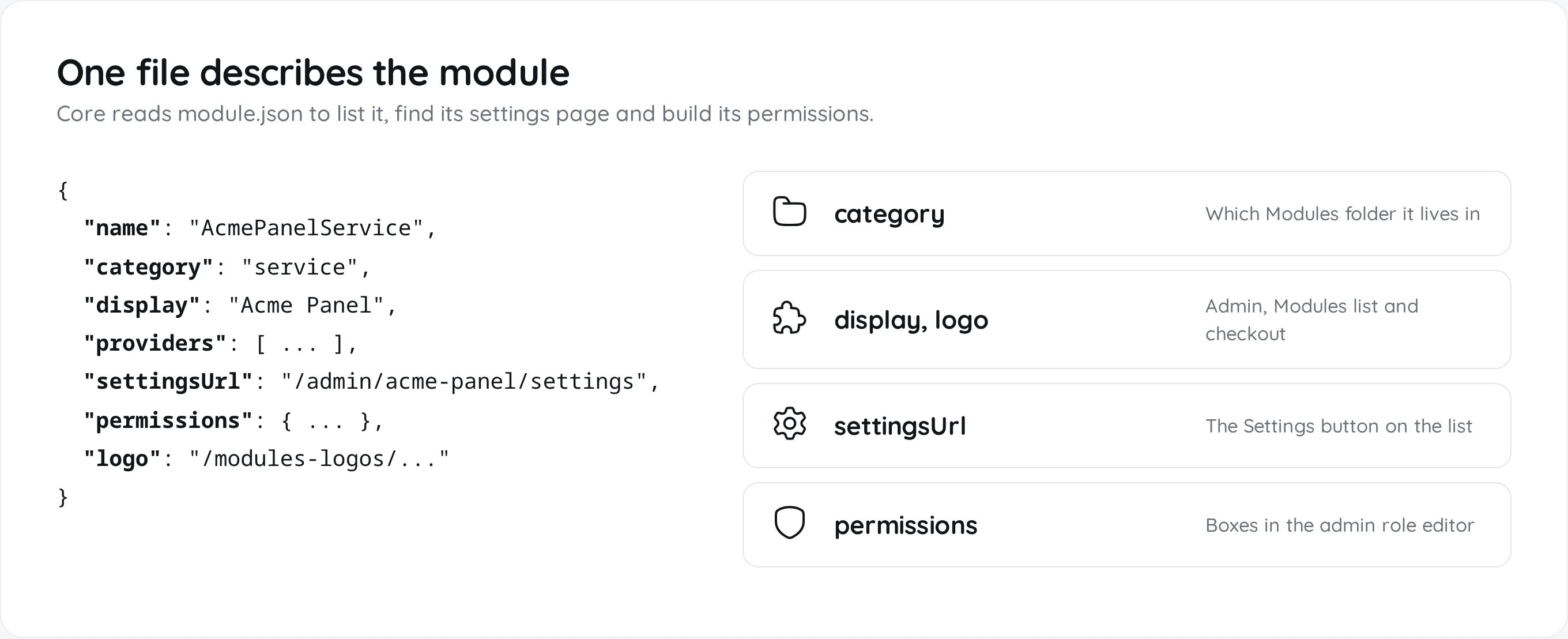
The manifest
name, alias, description, category and providers. module:doctor fails without them.
Every field
Every field
Admin permissions
Declare them inmodule.json. Core merges them into the permission map and the admin role editor.
Routes leave off the /admin prefix
Routes leave off the /admin prefix
Node keys carry the full path, the
routes list does not. module:doctor flags it if you get this wrong.Every node needs a category
Every node needs a category
Without one, the role editor draws no checkbox and only a superadmin can use the page. Existing categories are
gateway_settings and addon_module_settings.Nodes can be method specific
Nodes can be method specific
Prefix with a verb:
"DELETE:/admin/acme-panel/backups/{id}". A node with no routes is fine when your controller checks $user->hasPermission(...) itself.Do not rename a node after release
Do not rename a node after release
Keys are stored in each role’s permissions. Renaming one silently removes access.
Settings page without React
ExtendModuleSettingsController, return your values and a field list, and core renders the page. It takes the title, logo and back link from module.json. The page uses the Admin Modern theme.
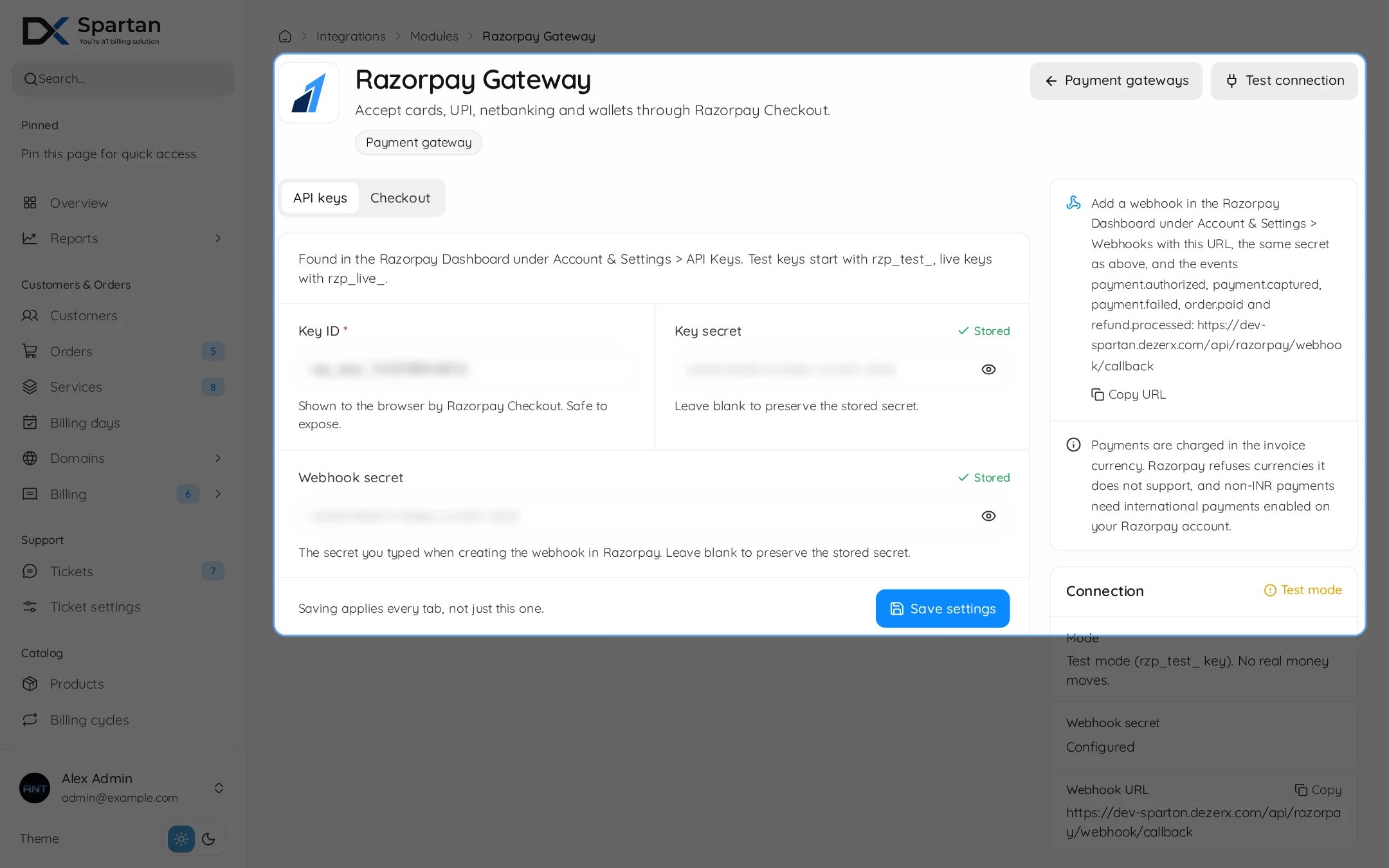
Field types
Field types
Every field also takes
placeholder, help, max_length, full_width, copyable and visible_when (['field' => 'mode', 'equals' => 'live']). For a rich text field you need a custom page, see Admin pages.Definition keys
Definition keys
resolveSecret()
resolveSecret($request, 'api_key', $stored) keeps the saved secret when the password box is posted empty.flushPaymentGatewayCache()
Gateways must call it after saving, or checkout keeps a stale list for five minutes.